The right dock comes down to your water depth, bottom conditions, and how the lake behaves. Here’s the simple version — and we’ll confirm it with a free quote.
Send us your lake, your water depth, and a photo of your shoreline. We’ll tell you which dock is right for your spot — floating or pole — and quote the exact build. No pressure, no guesswork.
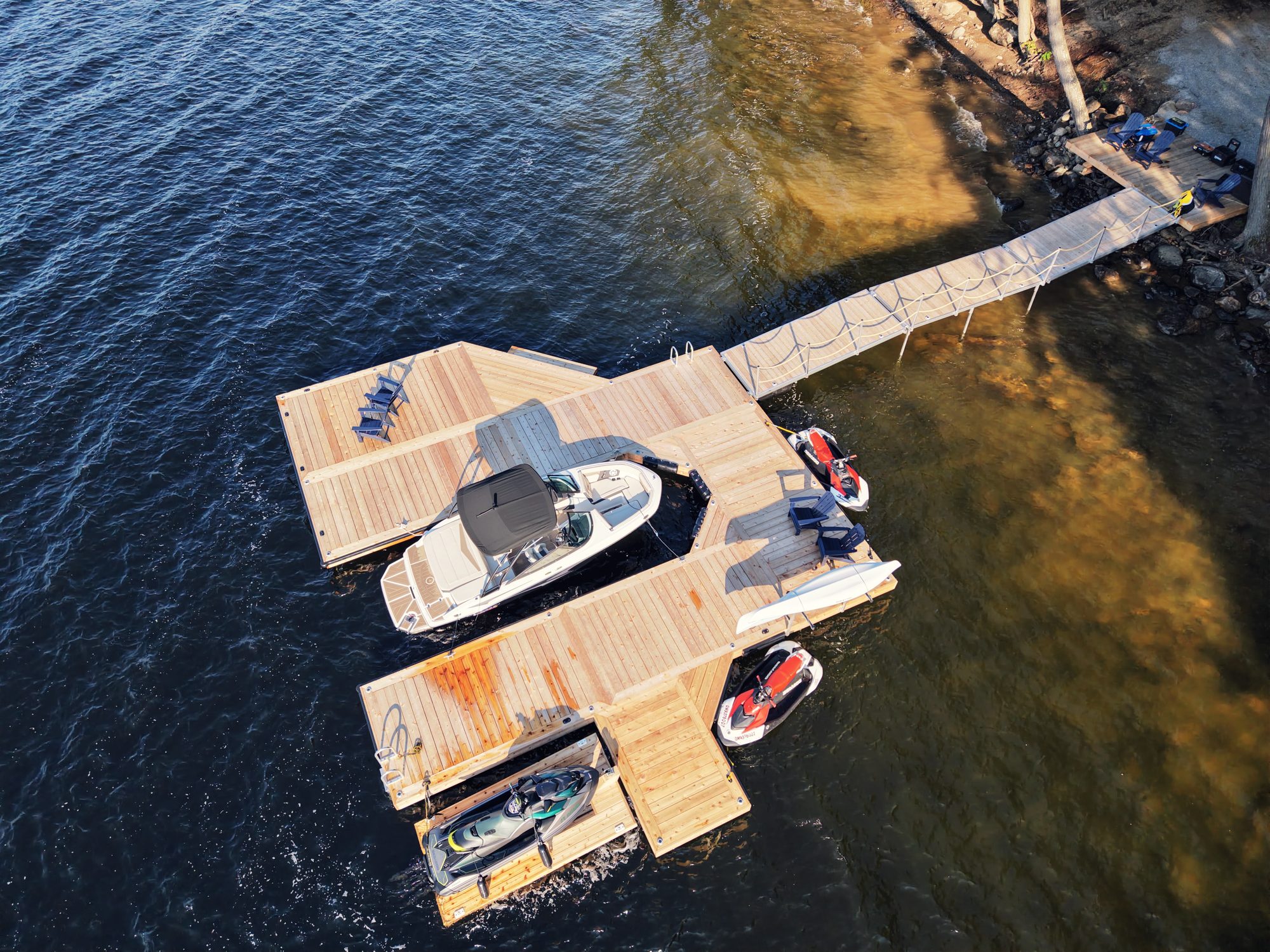
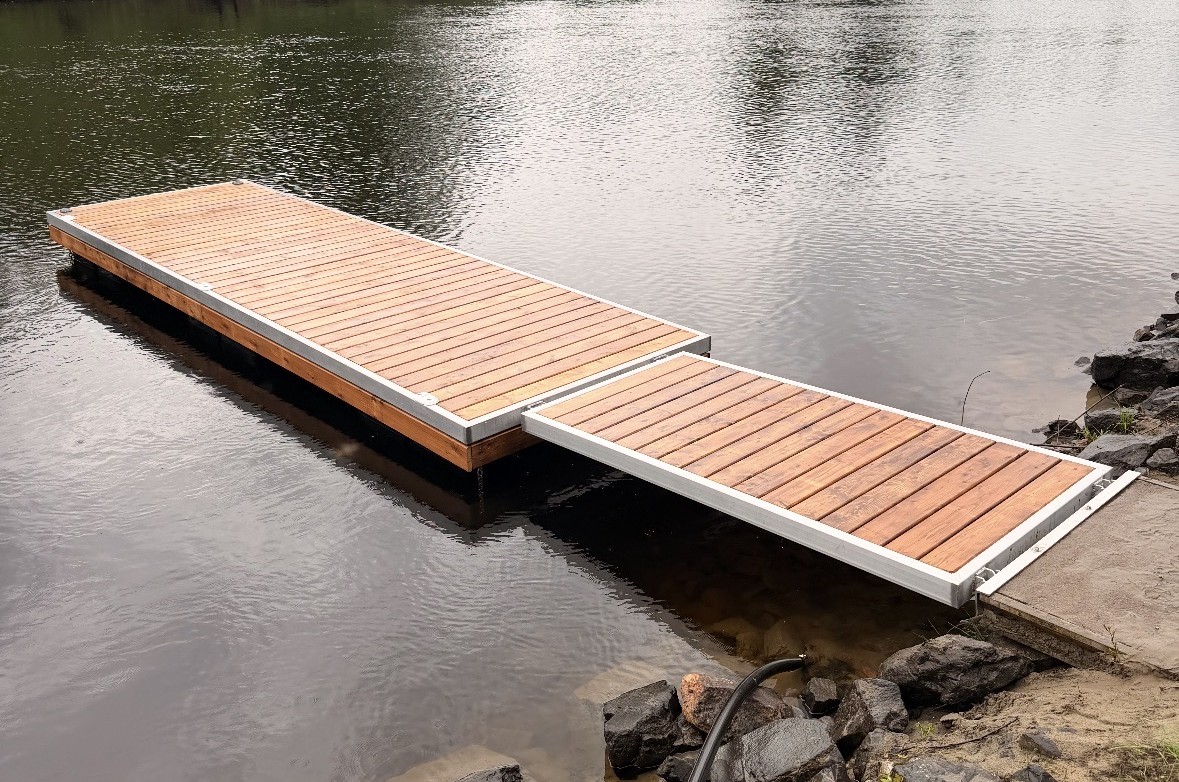
A floating dock rides on the surface of the water and rises and falls with the lake level. A pole dock stands on aluminum posts anchored to the lakebed, so it stays at a fixed height and does not move underfoot. Both are built on the same marine-grade aluminum frame.
Choose a floating dock for deep water where poles cannot reach bottom, for lakes with big seasonal water-level swings, and for soft, silty or rocky bottoms. It stays level no matter where the water sits that month.
A pole dock is the better choice for shallow to medium-depth water with a firm bottom, in sheltered bays and on calmer shorelines. It is the sturdiest footing you can build and stays exactly where it was put.
Build out past it. A pole dock and ramp system, or a floating dock with a long approach walkway, carries you over the shallow water so the usable end of the dock sits in real depth — and still works late in the season when the lake drops.
Use a run of stepped platforms and ramps rather than one steep span. Where the ramps meet floating sections they are hinged, so the whole system follows the water as the level changes through the summer.
Send Legacy Docks your lake, your water depth and a photo of your shoreline. We will tell you whether floating or pole suits your spot and quote the exact build for free. On complicated sites we inspect in person first.
Tell us about your shoreline and we’ll make our recommendations — then build it to last.